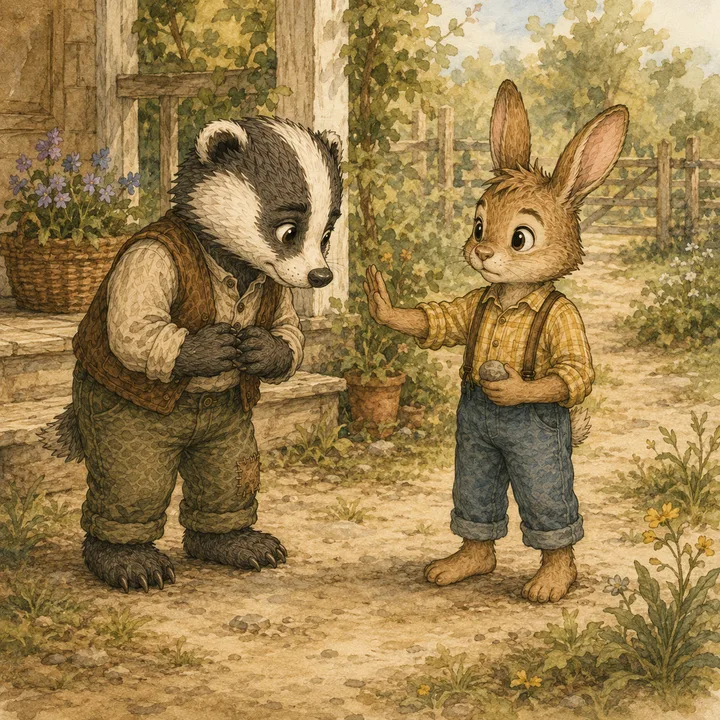
Baxter Badger + Lead Child

Shared connection

Spend a moment with Baxter Badger + Lead Child

Baxter Badger and a named lead child form a child-safe friction relationship pair used sparingly when a story needs boundary testing, social pressure, impatience, pushy energy, or a repairable wobble.

Who this is for: Families and readers who want to understand how neighbors support one another in everyday moments.

Why this matters: This connection helps the wider story world feel steady, relational, and welcoming.

Meet the neighbors Open the map Read a story

Who you'll meet in this connection

Neighbor in this connection

Baxter Badger

Baxter helps this connection stay warm, clear, and easy to step into.

Where this connection often appears

Follow one nearby place to watch this relationship in context.

Choose your next step

People who explored Baxter Badger + Lead Child also wandered through:

Continue with Baxter Badger

Or choose another path:

Developer Mode: relationship metadata and provenance

Identity

Entity Type: relationship

Entity ID: REL-0004

Source Document: Relationships/Bax-Lea Visual Canon.docx

Canonical excerpt

15.24 Baxter Badger + Lead Child — Boundary-Testing and Repair Relationship Sheet Relationship Function: Baxter Badger and a named lead child form a child-safe friction relationship pair used sparingly when a story needs boundary testing, social pressure, impatience, pushy energy, or a repairable wobble. Baxter may crowd a little, rush a turn, speak too bluntly, grab for the first chance, or assume the lead child will move faster than they can. The lead child may hold a boundary, ask for space, name what is fair, wait for help, choose a smaller step, or invite repair. This relationship should create a manageable moment of practice, not fear, bullying, humiliation, danger, or villain conflict. Relative Scale: Baxter is a stocky anthropomorphic badger child with gray-brown fur, clear black-and-white badger face markings, rounded childlike body, sturdy practical rural clothing, and repair potential. The lead child must be a named approved Hawkins Hollow child selected for the story, with all of that child’s individual locks preserved. Baxter may appear stockier, firmer, or more forward-leaning, but he must remain child-scale, not adult, teen, predatory, looming, muscular, or dangerous. The lead child should remain visually central enough to show agency, boundary, and emotional truth. Default Spacing: Use clear, child-safe boundary spacing. Baxter may stand a little too close, lean forward slightly, or step into the lead child’s path just enough to create social pressure, but the scene must still feel safe and manageable. Leave visible space for the lead child’s hands, face, body posture, object, access path, wheelchair, glasses, scar, tail, shell, ears, or other high-risk visual locks. If the lead child is Asher, do not use Baxter crowding near the wheelchair unless the st

Graph connections